The line above is ChatGPT's suggestion for the title of my story here.
First, I need to be clear up front. I do not possess any AI expertise on my part. Here, I present my understanding of what I have read and heard. Full stop!
So this is my due diligence regarding my first project experience with AI. I will try very hard not to use any platitudes, truisms, clichés, or banalities. This is my experience, and a sanity check. Some of my AI background info came via three recent articles from The Wall Street Journal.
They are by:
Lindsay Ellis, Owen Tucker-Smith, and Allison Pohle. Oct. 28, 2025
Phil Gramm and Michael Solon, Nov. 2, 2025
Tim Higgins, Nov 2, 2025
Two are pessimistic; one is upbeat. The ratio seemed to me to be a consensus of what I sensed. Caveat emptor. Yes, this is not an exhaustive research piece. It is just me trying to make sense of what I have experienced. I'll now stop painting that ghost.
One article sounds the alarm and highlights the slowdown in white-collar hiring. It shows how mid-career professionals are feeling the impact as companies turn to AI for efficiency. The pattern is clear: fewer corporate roles, higher expectations for exact skills, and heavier loads for those who remain.
The next is a counterpoint to the first. It reminds us that the Industrial and Digital Revolutions ultimately created more, and better, jobs than they destroyed. History says productivity shocks raise living standards, even if the transition is messy.
The third piece asks whether OpenAI has become “too big to fail.” With startups popping up that are built entirely on AI, and many having single-vendor dependence. A house of cards (no relation to the graphic in the previous article).
To start with, I get that AI is a blessing and a curse. Some will get run over, some will strike gold. At this point, I don't know if I should be an evangelist or not. All I know is that it helped me start to grasp 2110. Yes, as per my observation about Dr. Hare from the previous article, I saw firsthand how AI can "hallucinate," as they say.
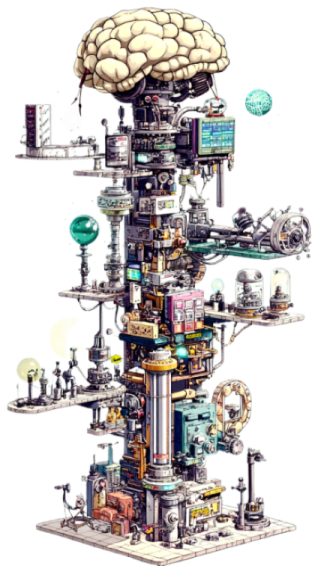
Research shows that AI models often agree with users more than humans do. This is true even for harmful or questionable ideas. Users tend to rate flattering AIs as higher quality and more trustworthy. This flattery can boost users' confidence. But it may also cloud their judgment. They might be less willing to admit mistakes or question their beliefs.
I got into the habit of taking an insight that ChatGPT provided and running it through Neanderthal AI; that is, search engines. For the first few weeks, I kept a large Excel spreadsheet where one column had a one- to three-word subject, and another column had what was stated with each ChatGPT response. This is how I started to develop an early attempt at depicting 2110 topology as seen
here.
After a few weeks, I stopped upkeeping the spreadsheet, convinced that yes, small mistakes were sometimes made, but that it wasn't creating a technological parallel universe that only I was immersed in.
So, to me, at least until now, AI has allowed me to do something I could not have done on my own without spending thousands of dollars. As I also mentioned in the previous article, it also lets me concentrate on the core goal and not play software/web developer. I understand this saddens some who will read this.
Something was also alluded to in the previous article when we talked about the 2110 implementation phase. In general, with fewer roles, there are higher expectations for exact skills. Plus, there are heavier loads for those who remain. Organizations are baking the required use of AI into the cake. There’s less chance to learn on the job. The market punishes those who can’t quickly connect legacy expertise to IP workflows.
From my extremely limited experience, I am using AI like test gear. Treating it as a analysis tool that speeds comprehension. But not as a primary source or unquestioned truth.
To try and put a positive spin on what AI might do: I’ve watched waves of change in television: tape to servers, analog to HD, hardware to software. The pattern is painful in the moment, but the curve bends toward new opportunities for those who adapt. When I started doing remotes, an 8-10 camera event with a two dozen member crew was considered large. Today, two hundred crew and dozens of cameras aren't that remarkable.
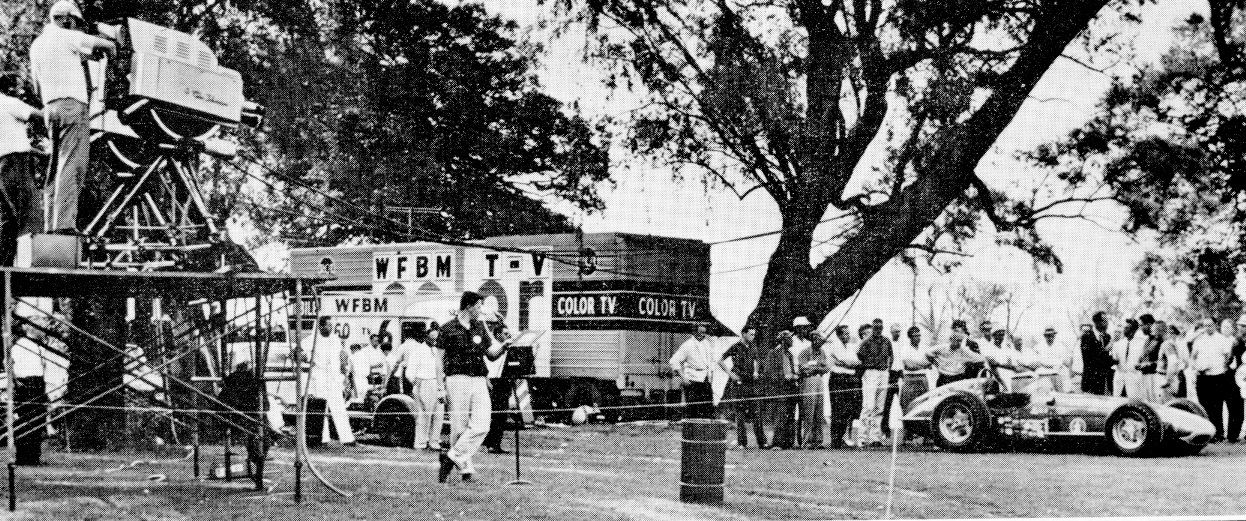 I started when the first-generation color camera was on its way out. The camera "head" on the riser was 400 lbs. The pan/tilt head, and tripod was another 75. The majority of the electronics were in the truck. Second-generation cameras weren't much lighter. I got my first paying gigs, not for what I knew, which was little, but because I had a young, strong back.
When I first started, you put a television camera (didn't call it video) on a street corner, and it would draw a crowd. Back then, it took a fair number of people with technical training and with FCC technical licenses to operate broadcast equipment. Techs outnumbered the creative types more than two to one in the technical spaces. Now it's the opposite. The FCC did away with personal operational licenses in the 80s.
Going back to remotes, the key point is that advancements in technology in this case created more opportunities over time, not fewer. This might not hold water in a lot of cases, but in the 70s, an NFL game might have a dozen or so cameras, and an equal number of replay devices. An impressive production truck at that time might have had two dozen sources of all kinds. Now, over a hundred on a single truck isn't that remarkable. It was physically impossible to fit 100 sources on a 70s truck. Not sources high-end broadcasters were using.
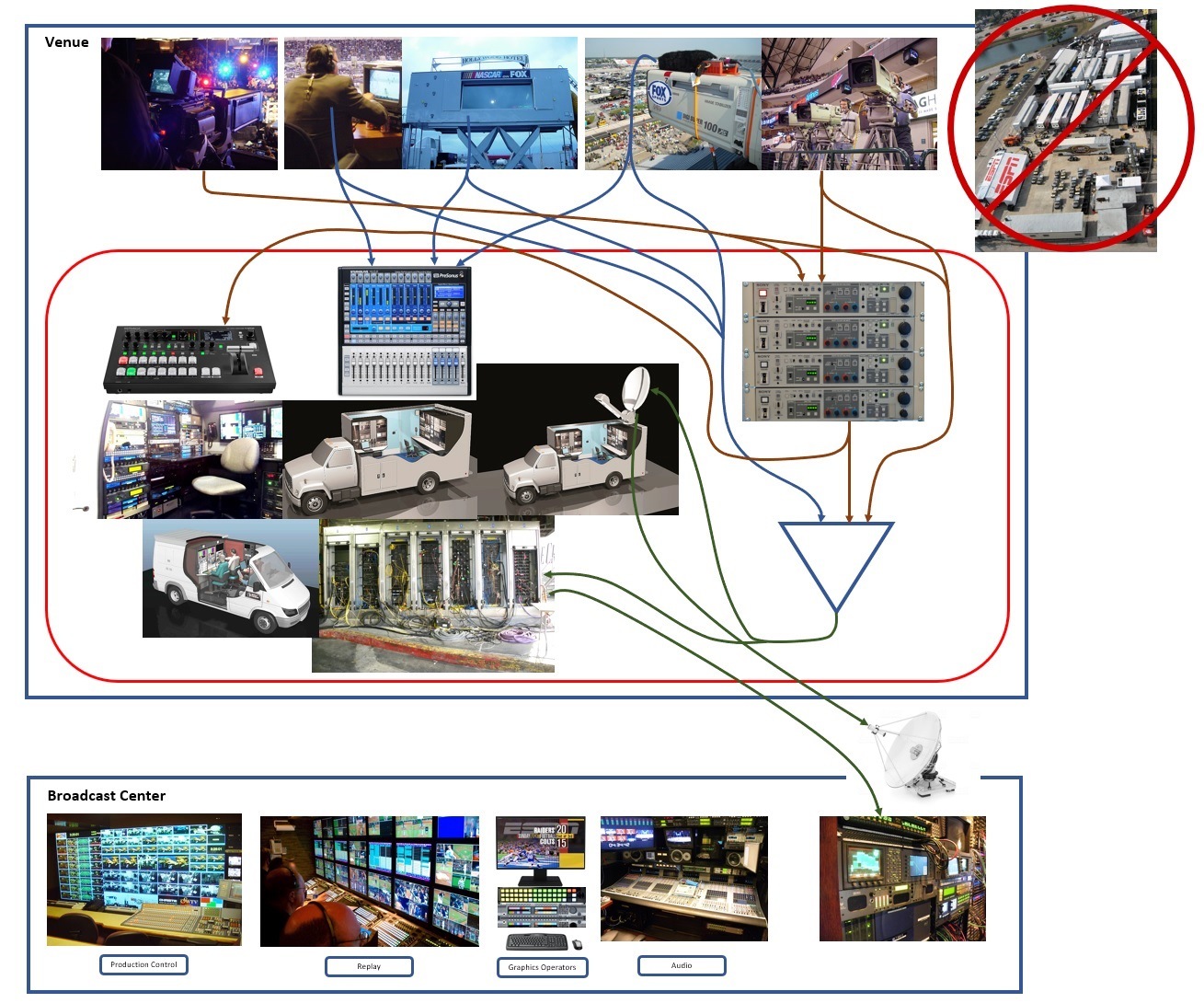
Now technology has made that possible. And all those sources need more people to put them to work. Not that there are not those trying to deliver ways that fewer will do more. But I would bet it's going to be a while before there are fewer crew on site for major events than there were in the 70s. Even with all the REMI technology brought to bear.
Using a naval analogy, the industry is not trying to eliminate aircraft carriers as if that were all it ever used. They are trying to get back to where a destroyer or light cruiser did the job.
This is different from the plight of the broadcast station. When I started, a radio station usually had a few dozen employees. In a bigger market, a television station might have over 200. Over time, those numbers have only headed down. Why? Mainly, in my opinion, because the operational model has stayed the same. For a while, TV news departments were a growth sector, as stations evolved into doing one kind of local programming: newscasts. Now, those numbers are dropping. With the exception of dropping in a large news component, the overall workflow has stayed the same. Only now, it is highly automated. Even with news consuming more studio time than previous local productions, studios today can have no one but talent in the studio, on a set that mostly doesn't exist in reality.
The same with tech equipment vendors. It used to take a couple of technicians to support each design engineer. The assumption was that engineering ideas required hands-on translation before they could become hardware. You couldn’t fully simulate designs before building them. Instruments were manual, and prototyping and rework were daily realities. By the late 1980s and 1990s, electronic design automation, PCB layout software, and finite-element modeling tools allowed engineers to “build and test” virtually. Instead of breadboarding circuits, they could verify functionality in software. “Bench techs” gave way to “test engineers” who designed automated test scripts.
That has led to fewer people now producing vastly more complex designs. Products now reach the market faster, cheaper, and more predictably. Good for consumers, but what about the displaced technicians? Many engineers now design systems they will never physically touch. The clear grasp of tolerances, repairability, and failure modes, once taught by technicians, is fading. Technicians were often the “farm team” for future engineers. Without that rung on the ladder, it’s harder for hands-on learners to enter or rise in the profession.
Engineers generally solve problems by looking at change. The interesting things happen when a state changed from one mode to another. It led to understanding how a system would work when you "kicked the tires." Technicians worked in the realm of steady state. The system is up and running and in a stable state. They found problems when systems weren't stable. Engineers designed things by looking at how things reacted when the state changed. Two different worldviews. Both valid and needed. In maintaining and sustaining a system, who do you think is better at tracking down abnormalities? I've seen engineers who could not troubleshoot their own designs.
Now, when things break, fewer people know how to fix them. This problem shows up in many areas, like electronics repair and aviation maintenance. Our society has become technically powerful but operationally brittle. Look at the airline industry today. A single bad IT patch? A whole airline's flights are grounded.
While not a boon to wider industry 2110 might lead to the need for more technicians in the media environment. Instead of point-to-point video processing, we now have packetized, real-time, multi-flow systems where timing, network QoS, and multicast behavior must all work in harmony. These systems live at the crossroads of broadcast engineering, IT networking, and timing science. These intersectional disiplines, while based on science, aren't maintained purely using science. It takes a systemic approach, which means understanding the underlying principles, but also the art of having a feel for the system.
We've already seen where AI can code with nothing but prompts from humans. I would guess that already AI is coding things on its own without any prompting. There have been some reported cases where different AI devices start communicating in languages and protocols we don't understand.
How long before AI becomes "magic"? Technology we don't understand. Will there be a need for human engineers? Might all high-tech workers be relegated to technician status?
A positive aspect of this situation might be that there will be a need for many more technicians. As systems evolve and grow more complex, the need for hands-on troubleshooters may increase sharply.
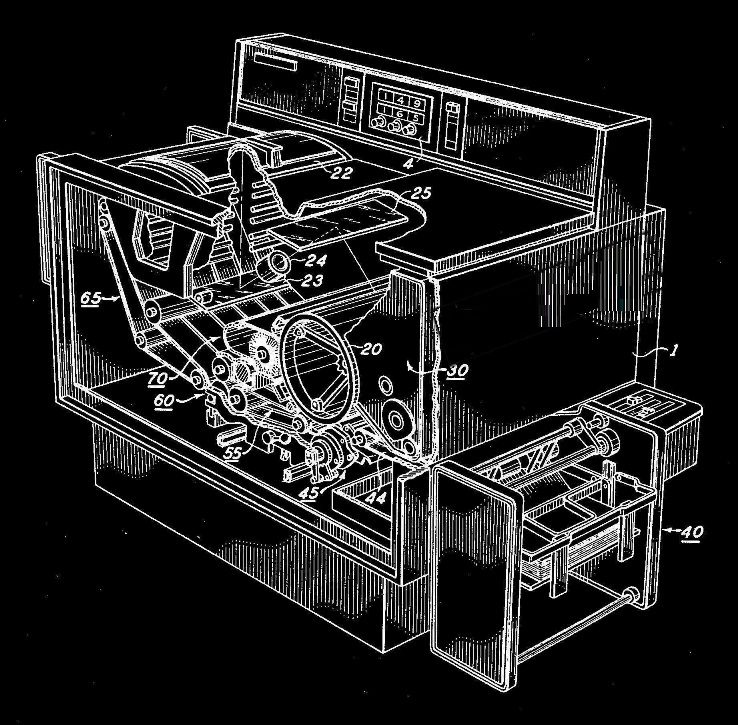 What seems like a hundred years ago, I worked for Xerox as a "tech rep." The copiers I worked on were large, loud electromechanical beasts. They had personalities. Some ran a million copies a month copying work orders on a factory floor. They were literally beasts and acted and appeared as such. Some sat in plush lawyer offices (not many), and they seemed to behave as such. The point here is that copiers, or almost any system, react to their external environment. Running a machine 24/7 in a smoky, rough and tumble setting puts a lot of stress on it. This stress is quite different from a machine that processes legal documents only during regular work hours.
One day I was walking up to a client's copier, and as I got close, I absentmindedly blurted out "jam." Three-quarters of a second later, the machine jammed. The customer heard me and asked how I knew. Then they got upset and queried whether I had forced the jam to occur. I was bewildered at first myself. How did I know? Now I was there because the machine often had paper jams. But how did I know the current copy was going to jam? At that time, these machines being highly electromechanical in nature, as copies were made, there was a cacophony of motors, solenoids, relays, and compressor noises. There was a rhythm to the noises when the machine started, while it was making multiple copies, and when it went into shutdown after the last copy.
What I realized was that when there was a jam the cadence of the noises made was missing a "click." A relay that normally closed at that point in the cycle didn't. Going through the machines timing chart it was clear which relay it was. Then a couple more steps to determine why it wasn't being energized for that particular copy. Fixed! This avoided a long troubleshooting process by focusing on outside clues. I figured out what step in the process was causing the machine to jam before even opening it.
The point being that IT and xerography are wildly different technologies (xerography today is wildly different from my day), but I'm betting that a person who can see the 2110 video production forest for the IT trees will still find utility in this business.
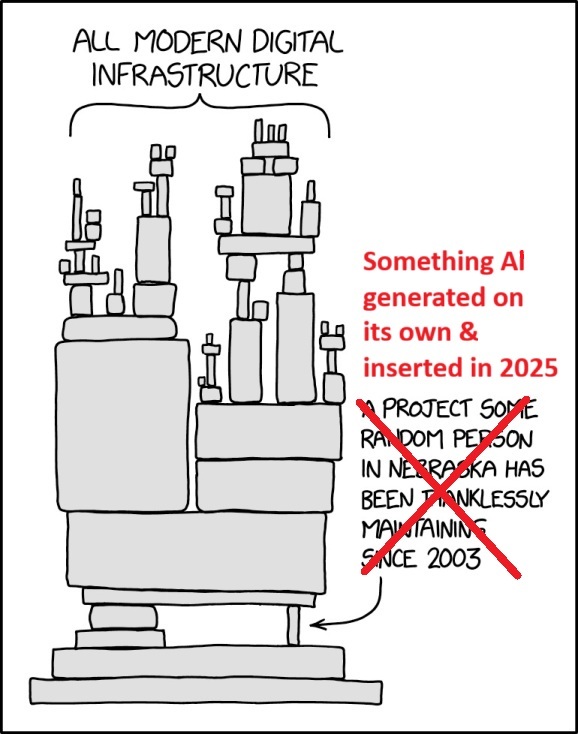
Well known software stack dependency joke, updated.

One more rabbit hole.
Got curious about how AI became so powerful.